
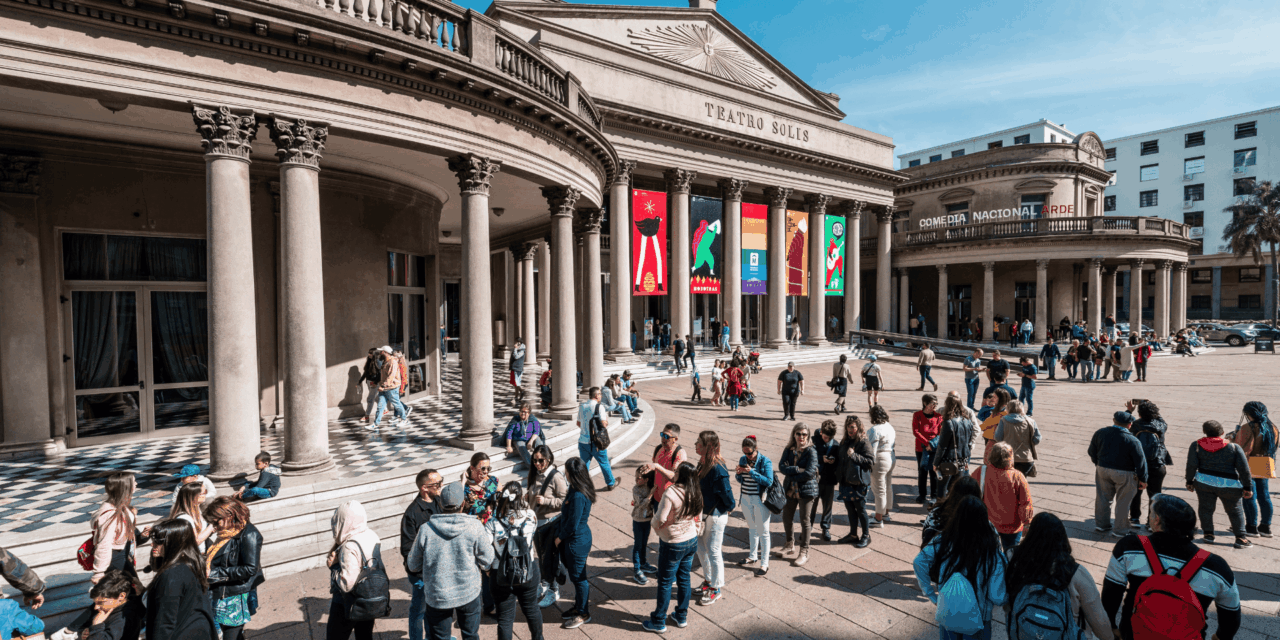
For U.S. meeting planners, South America is often treated as a single, high-stakes decision. If you go south, you go big: major capitals, massive convention centers and complicated logistics. But there is another way to look at the region.
Instead of asking which city is the largest or loudest, planners may want to ask a different question: Which destination actually works best for regional meetings and incentives?
That question is quietly pointing more people toward Montevideo, Uruguay.
Montevideo is not trying to compete with the region’s largest cities. What it is doing instead is building a reputation as a reliable, approachable and experience-driven meetings destination for South America itself. That shift matters, especially for U.S. planners managing regional teams across the continent.
Why should U.S. planners pay attention now?
The case for Montevideo starts with how meetings are changing.
More U.S.-based companies are organizing regional gatherings in South America, bringing together teams from Argentina, Brazil, Chile, Paraguay and beyond. These programs need to be easy to attend, easy to manage and appealing enough that people actually want to be there.
Montevideo checks those boxes.

Lara Droogleever Fortuyn Along the Rambla in Montevideo Uruguay. Lara is founder of Touruguay in Montevideo. Courtesy image
From a planning perspective, it offers:
-
Shorter travel times for regional attendees
-
A compact and walkable city layout
-
A business-friendly environment with a relaxed pace
-
Highly effective infrastructure without the pressure of a mega-city
“For many South Americans, Montevideo represents stability, safety, and quality of life,” says Lara Droogleever Fortuyn, MSc, founder and guide at Touruguay, a local expert. “It’s a city that feels calm and approachable, without the intensity of larger capitals in the region.” It’s also easy to explore the nearby beaches, wine regions, countryside and coastal towns.
For U.S. planners, that combination can reduce friction while still delivering a destination that feels distinct and memorable.
Uruguay is taking meetings seriously.
Uruguay’s rise as a meetings destination is not accidental.
Through its national tourism strategy, the country has made meetings, incentives, conferences and events a clear priority. Montevideo sits at the center of that effort, supported by government programs designed to attract and assist international and regional events.
Uruguay’s official tourism platform, Uruguay Natural, outlines how the country supports business events through its dedicated MICE program, including infrastructure, professional services and government-backed incentives.

Uruguay is host to many international congresses each year. Courtesy of Ministry of Tourism of Uruguay
According to Uruguay’s Ministry of Tourism, the country continues to invest in international promotion and long-term development of the meetings sector.
“The strategy is built on three core pillars: strengthening the local ecotourism, active bidding and attracting of international events, and sustained destination promotion through global trade fairs and direct engagement with organizers and associations,” says Mauricio Munoz, a member of the MICE team for the Ministry.
South Americans choose Uruguay, Munoz adds, because it offers:
- Institutional and legal stability
- Operational ease for event organizers
- High service standards
- Short distances and simple logistics
- A safe and reliable environment for international delegates
That level of institutional support is often what gives planners confidence to look beyond their usual destinations.
Uruguay also provides a distinctive advantage: the ability to deliver MICE programs with strong experiential content—gastronomy, wine, culture, coastline and nature—without the complexity and congestion of large metropolitan centers.
The types of meetings Montevideo is hosting.
Montevideo is not chasing every kind of event. Instead, it is doing particularly well with meetings that value accessibility, efficiency and experience.
Montevideo regularly hosts mid-sized congresses and professional meetings tied to sectors such as technology, telecommunications, education, health care and agriculture. These events often draw attendees from across South America who appreciate the city’s ease of movement and manageable scale.
Corporate planners are also using Montevideo for leadership meetings, regional sales gatherings, executive retreats and incentive travel programs. These events tend to blend structured meetings with local experiences, rather than keeping attendees inside conference rooms.

The Tannat grape is the signature grape of Uruguay and often compared to a Bordeaux. Courtesy of Ministry of Tourism of Uruguay
Throughout 2025, Uruguay was host to more than 200 MICE programs, including congresses, corporate conventions, association meetings and incentive travel. Examples include:
- Regional Congress of a South American Sector Association (approximately 600 delegates, organized by an international association with a South American regional office)
- Multinational Pharmaceutical Corporate Convention (approximately 300 executives for a program that combined a convention with incentive activities)
- International Economics and Finance Forum (approximately 400 to 500 attendees with an academic and corporate profile)
- Large-scale Cultural–Corporate Event (more than 5,000 attendees leveraging a multi-purpose venue in Montevideo)
In 2026, Montevideo will be host to regional and international events across key sectors, such as health, science, technology, tourism, finance, political communication, law, sport and culture.
Examples of programs in 2026 include:
- Neuroscience Next: Montevideo Hub (February 2026)
- 47th National Congress of Internal Medicine
- 1st International Nephrology Meeting
- Uruguayan Congress on Coeliac Disease and Inclusive Nutrition
- LATAM IT, LATAM Finance, and LATAM Human Resources Meetings (March 2026), all in their fourth editions,
- LegalTech Summit and the GGI Latin American Regional Conference — these programs combine congress formats, networking and hybrid models with strong regional participation.
The tourism and creative sectors will also be strongly represented, with the 1st edition of Expo Turismo 2026, the 4th edition of Turismo 360 – International Fair on Smart Tourism Destinations, Marketing and Wine (7th edition), and the Uruguay Media Show, reinforcing the link between tourism, communication, and experience design.
The city will welcome high-profile cultural and sports events, such as the First World Dance Championship, Expo Sport and Wellness 2026 and the Olympic Cycle – Olympic Beaches – Olympic Expo, a year-long program.
“In terms of forward planning, there are already active bids and advanced discussions for 2027, particularly within the international association segment, reinforcing the destination’s long-term positioning and continuity strategy,” Munoz explains.
Why Montevideo works for regional attendees.
One of Montevideo’s biggest strengths is how uncomplicated it feels once people arrive.
Flights from neighboring countries are short. Hotels, venues and restaurants are close to one another. The waterfront rambla acts as a natural meeting point for informal conversations before and after sessions.
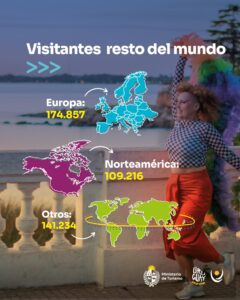
2025 Ministry of Tourism of Uruguay visitor statistics: More than 109,000 from North America, nearly 175,000 from Europe and nearly 2.8 million from within South America, including 2.16 million coming from Argentina. Courtesy image.
South Americans enjoy the relaxed and personal way they can do business here. “Meetings usually start with 10 to 15 informal minutes, often with a mate in hand. There’s flexibility, openness, and room for creative thinking, rather than strictly following rigid structures,” Lara explains.
For planners, this translates into smoother programs and fewer logistical headaches. For attendees, it creates a sense that the meeting is happening within the city, not apart from it.
The weather and geography work in Uruguay’s favor.
Montevideo also benefits from something U.S. planners often overlook until they experience it: the seasons are reversed. When it is winter in North America, it is summer in South America. and Uruguay has a pleasant subtropical climate.
That timing opens the door to meetings planned between November and March that take advantage of:
-
Warm but comfortable temperatures
-
Long daylight hours
-
Outdoor dining and waterfront events
-
A slower, more relaxed pace outside peak North American travel seasons
Uruguay’s geography adds to that appeal. The country sits between Brazil and Argentina, with rolling countryside, vineyards, beaches and historic towns all within a few hours of Montevideo. For meetings and incentives, that makes it easy to justify staying an extra day or two.
For many attendees, the combination of favorable weather and accessible side trips turns a business meeting into a longer, more meaningful visit.
Meetings that naturally turn into longer stays.
Another sign that Montevideo is working as a meetings destination is what happens when the agenda ends.

Punta del Este is known as a luxurious seaside resort town on a beautiful peninsula in Uruguay. Courtesy of Ministry of Tourism of Uruguay
Many business travelers choose to stay longer, and planners are increasingly building that into program design.
Montevideo’s coastal setting encourages downtime and informal networking. Its food and wine culture makes it easy to add off-site dinners or incentive-style experiences. And its location allows for simple extensions to other parts of the country.
From the capital, it is easy to add:
-
Punta del Este for resort-style incentives
-
Towns for history and culture
-
Rural stays for nature and team-building
Excellent wineries are within easy access to the capitol, ranging from 30 minutes to an hour. Punta del Este — South America’s leading beach resort — and Colonia del Sacramento are within 2.5 hours of Montevideo by car.
Uruguay is not as large as you’d think. The whole country can be driven in about eight hours from north to south.
Incentives and support planners should know about.
Uruguay’s government offers concrete support for qualifying meetings and events, including tax incentives and official recognition for events of tourist interest. These programs are designed to make Uruguay more competitive and to help planners manage costs without sacrificing quality.
- VAT exemption (Decree 220/998) applies to:
- Rental of registered conference venues
- Audiovisual services
- Event-related catering
- Eligibility:
VAT exemption applies to events officially declared of “Tourist Interest” and hosted at venues registered with the Ministry of Tourism. - Institutional support:
Assistance with bid processes, coordination with local stakeholders, event promotion and event attraction efforts.
This framework reduces direct event costs and provides budgetary predictability—an increasingly decisive factor for regional and international organisers. For planners comparing destinations across South America, these details can be a deciding factor.
Additional details are available through Uruguay’s Ministry of Tourism and its official destination resources.
Local insight makes the difference.
One reason meetings work well in Montevideo is the strength of local partners who understand how to connect business programs with authentic experiences.
Local guides and destination experts help planners move beyond standard itineraries, creating programs that reflect Uruguay’s culture, food and pace of life.
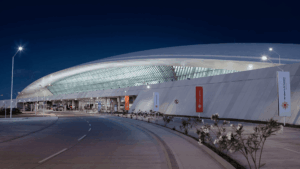
Carrasco International Airport, Near Montevideo Uruguay. Courtesy of Ministry of Tourism of Uruguay
Through her company Touruguay, Lara and her team share practical, on-the-ground guidance that business travelers and planners often find useful, including information on Montevideo’s airport, weather patterns, neighborhoods and day trips.
She explains those who visit for the first time are surprised by how much Uruguay has to offer and wonder why it feels like Uruguay is still a relatively unknown internationally. “Visitors discover a country that feels very Western, uncrowded, with little traffic and a friendly, informal business culture. Even in professional settings, people tend to show genuine interest in the person behind the role, which many travelers find refreshing, ” Lara adds.
That local perspective often turns a well-run meeting into a genuinely memorable one.
So is Montevideo a hidden gem?
For planners willing to look beyond the usual South American meeting hubs, Montevideo feels less like a gamble and more like a smart recalibration.
Uruguay’s capital city offers a rare mix of regional accessibility, government support, seasonal advantage and genuine sense of place. It is not trying to be everything to everyone, and that clarity is part of its appeal.
Lara adds that there’s an overall vibe here: The palm trees, historic architecture and the “slightly worn, empty buildings that give the city a raw edge.” Visitors quickly notice how Uruguayans use and enjoy the Rambla as a way of life: walking, biking and watching the sunset.
To be sure, Montevideo is known for its size being reasonable with getting around; however, the city center does not have a central metro. It’s a highly walkable city supported by an effective, integrated surface transit network.
For U.S. planners managing regional meetings and incentive travel in — or to — South America, Montevideo, Uruguay, is no longer just an interesting idea. It is a destination worth serious consideration.
Have you been to Montevideo or planned a meeting there? Let me know your experience.
Suggested additional reading: