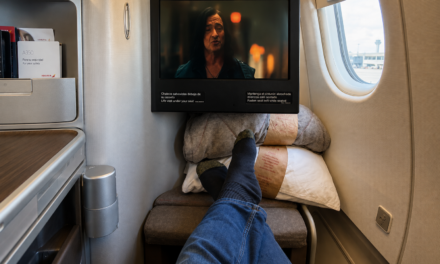

Today, the flight is more than a way to get from one city to another. It’s part of the business travel experience. Many travelers use that time to review a presentation, answer email, prepare for an important meeting or simply arrive refreshed and ready for the day ahead. Companies are also placing greater value on every business trip, making the journey itself more important than ever.
Across the industry, airlines are investing in better onboard connectivity, more comfortable cabins, improved airport experiences and digital tools that help travelers stay connected from departure to arrival.
Those investments reflect years of listening to business travelers, corporate customers and travel managers about what works—and what could work even better.
Several of those themes came into focus during executive roundtables at the GBTA 2026 Convention in Chicago. GBTA CEO Suzanne Neufang moderated conversations with airline and travel industry leaders, including American Airlines COO Nat Pieper, Southwest Airlines President and CEO Bob Jordan, United Airlines Scott Kirby and Cvent Founder and CEO Reggie Aggarwal. While each executive brought a different perspective, they shared a common goal: helping business travelers make every trip more productive, more connected and more valuable.
The goal isn’t simply to get passengers where they’re going. It’s to help business travelers make every trip count.
Premium travel has taken on a new role.
Premium travel isn’t just about a larger seat or a better meal. For many business travelers, it’s about arriving prepared for the work ahead. A quieter cabin, dependable Wi-Fi, lounge access and extra space to work or rest can make a real difference before an important meeting.
That shift is influencing airline investments. American Airlines, United and other global carriers continue expanding premium products because business travelers increasingly value comfort, connectivity and consistency throughout the journey. Customer feedback remains an important part of those decisions. Isom reinforced that point during the GBTA Convention, explaining that listening to customers continues to shape American’s premium strategy.
Kirby also emphasized that business travelers are placing greater value on premium experiences, prompting the airline to invest in upgraded cabins, lounges and onboard connectivity. The strategy mirrors a broader shift across the industry as airlines respond to growing demand for experiences that help travelers stay productive from departure to arrival.
Business travel continues when you board the plane.

GBTA 2026 CEO Roundtable with GBTA’s Suzanne Neufang and American Airlines’ Chief Commercial Officer Nat Pieper. © Rob Hard 2026
For many travelers, the flight is part of the workday. It’s time to review notes, organize ideas, respond to email or prepare for a presentation. Better onboard connectivity helps travelers stay engaged without feeling like valuable hours are lost in transit.
American Airlines and Southwest Airlines are introducing Starlink connectivity, while United continues investing in services designed for business travelers. These improvements are about more than faster internet. They help travelers stay connected with colleagues, customers and projects until they arrive.
Technology also supports flexibility when plans change. Better mobile apps, real-time notifications and digital travel tools help reduce stress and keep business trips moving even when disruptions occur.
Listening to customers is shaping the future.
Business travelers have changed, and airlines know it. Travelers expect fewer hassles, better technology and a smoother experience from booking through arrival. Those expectations come not only from frequent flyers but also from the companies and travel managers responsible for getting employees where they need to be safely and efficiently.
During the GBTA Convention, Jordan talked about how the airline has followed changing customer expectations while continuing to build on the service and hospitality that define Southwest. His comments reflected a broader trend across the industry. Airlines are adapting because business travelers are asking for experiences that help them spend less time worrying about travel and more time focusing on the reason for the trip.
Technology works best when it’s backed by people.
Technology can simplify almost every step of a trip, but it doesn’t replace the people who create a great travel experience. A gate agent who solves a last-minute problem, a flight attendant who recognizes a tight connection or a customer service representative who finds another option after a delay can turn a frustrating day into a successful one.
That balance between innovation and hospitality continues to separate leading airlines from the competition. Digital tools may make travel easier, but people still create the moments business travelers remember.
Being present still matters.

GBTA 2026 CEO Roundtable with GBTA’s Suzanne Neufang and United’s Scott Kirby. © Rob Hard 2026
Virtual meetings remain an important part of business, yet many conversations are still more productive when people gather in person. Sales calls, customer visits, conferences and team meetings often build stronger relationships because people share ideas, read body language and build trust face to face.
Cvent’s Aggarwal described this idea as the ‘Presence Premium’ during the GBTA Convention. As virtual communication becomes easier, the value of showing up in person increases. It’s a simple concept, but it helps explain why organizations continue investing in conferences, customer meetings and business travel.
Look ahead.
“Presence Premium” may be the phrase that sticks. As Starlink rollouts continue and premium cabins keep evolving, the airlines that understand why people still choose to show up — not just how to get them there faster — are the ones setting the pace.
For a broader look at the trends shaping the industry, read our companion article, ‘Business Travel Is Evolving: What’s Ahead?‘