

From Fino and Amontillado to Palo Cortado, Oloroso, Cream and Pedro Ximénez, I explored the sherry wines of Jerez, Spain and the traditions that have made the region famous for more than 3,000 years.
I arrived in Jerez, Spain, knowing very little about sherry wine.
Like many, I had heard of sherry and occasionally seen it on restaurant menus, but I couldn’t explain the differences between a Fino, an Oloroso or a Pedro Ximénez.
That changed quickly.
Jerez is the birthplace of sherry wine and the center of the region known as the Sherry Triangle, which also includes Sanlúcar de Barrameda and El Puerto de Santa María.

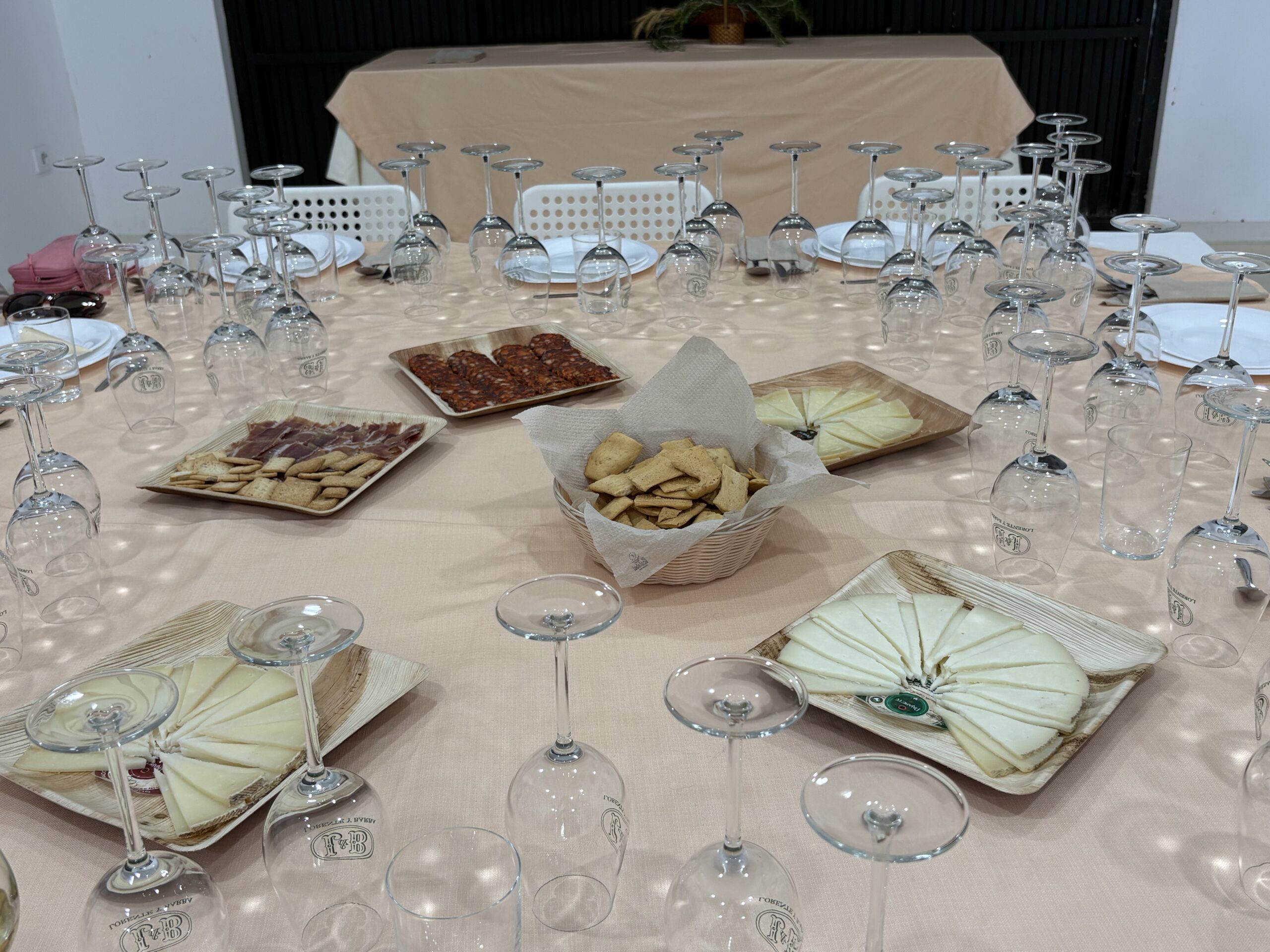
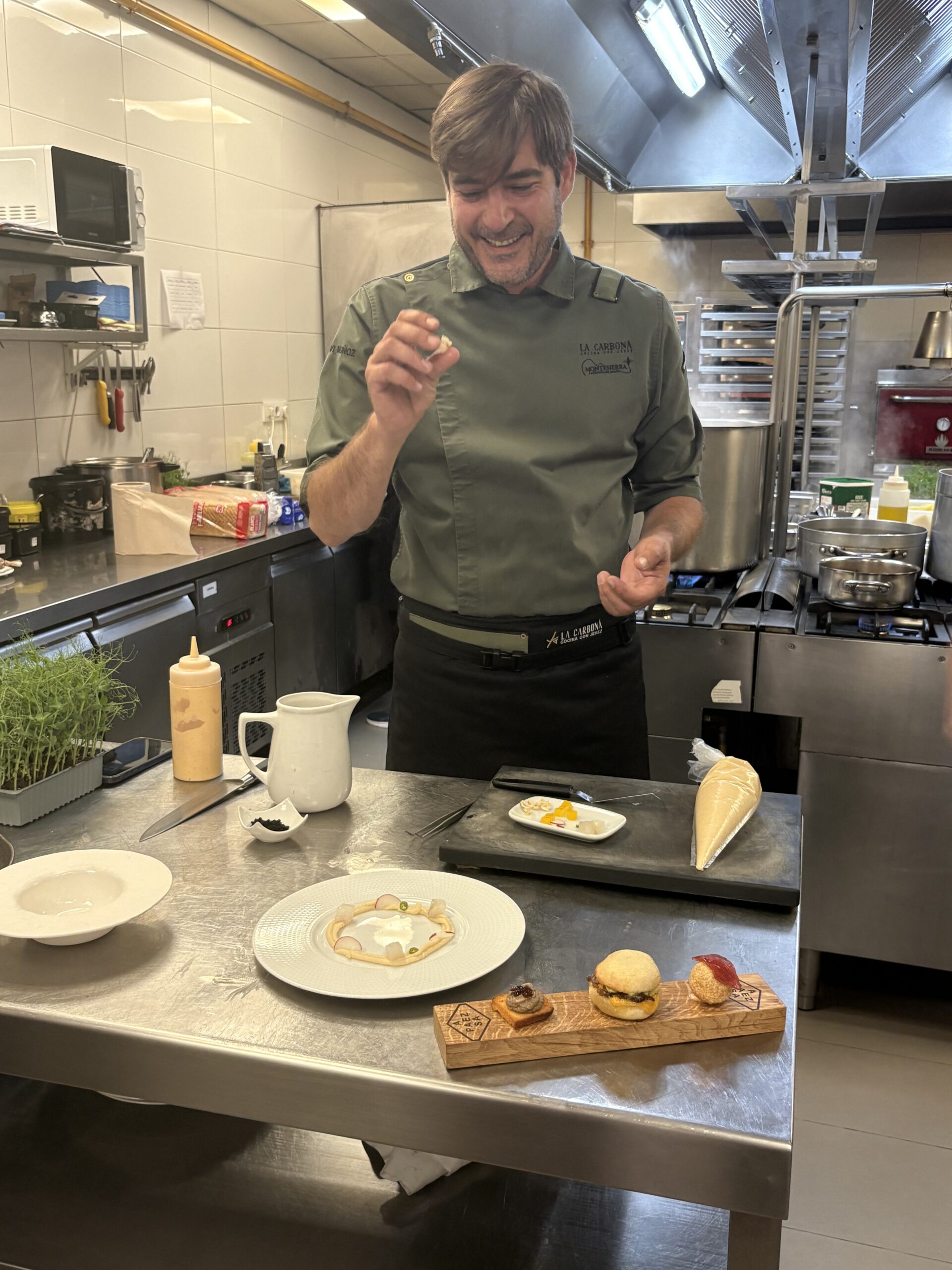
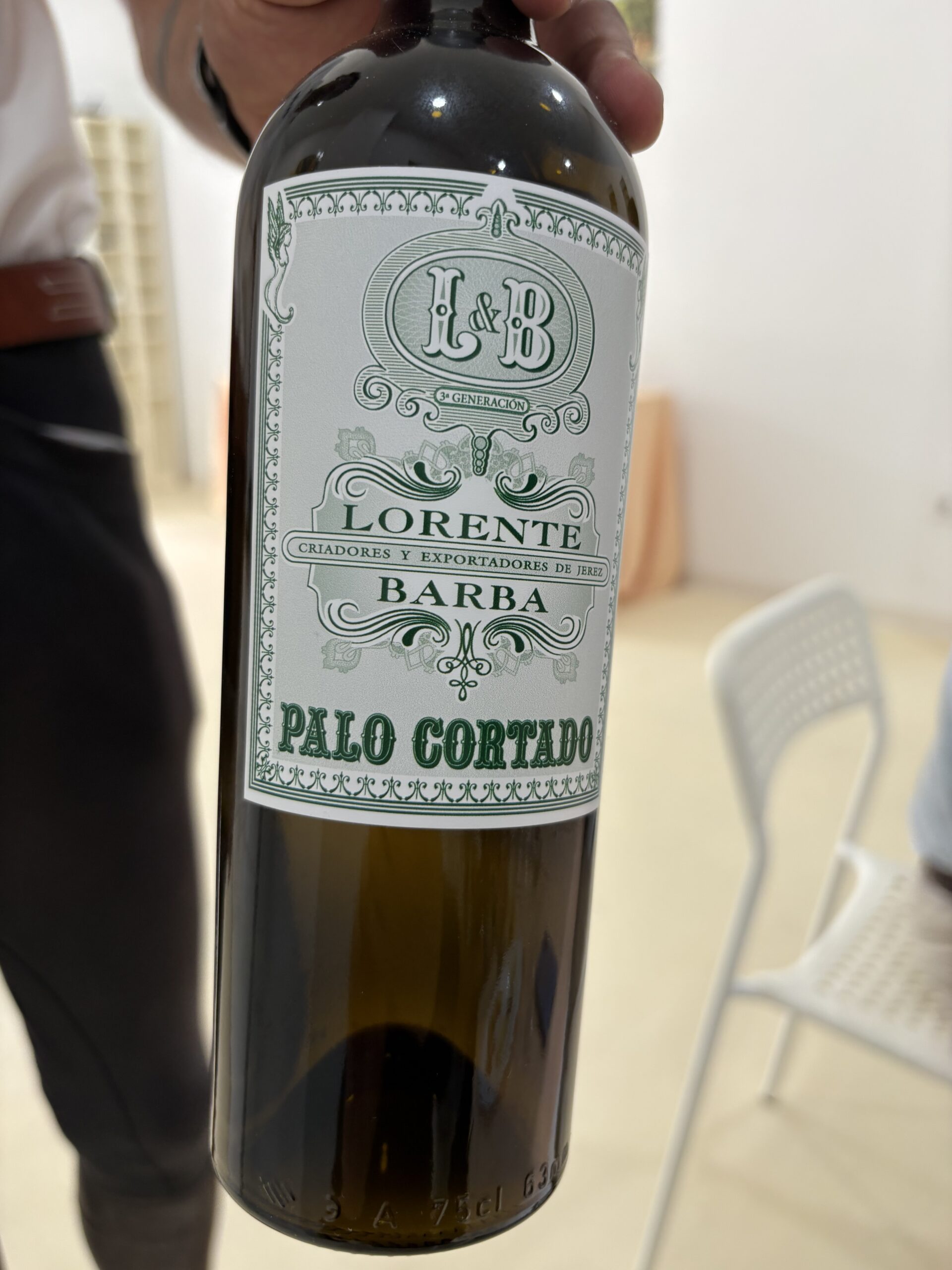
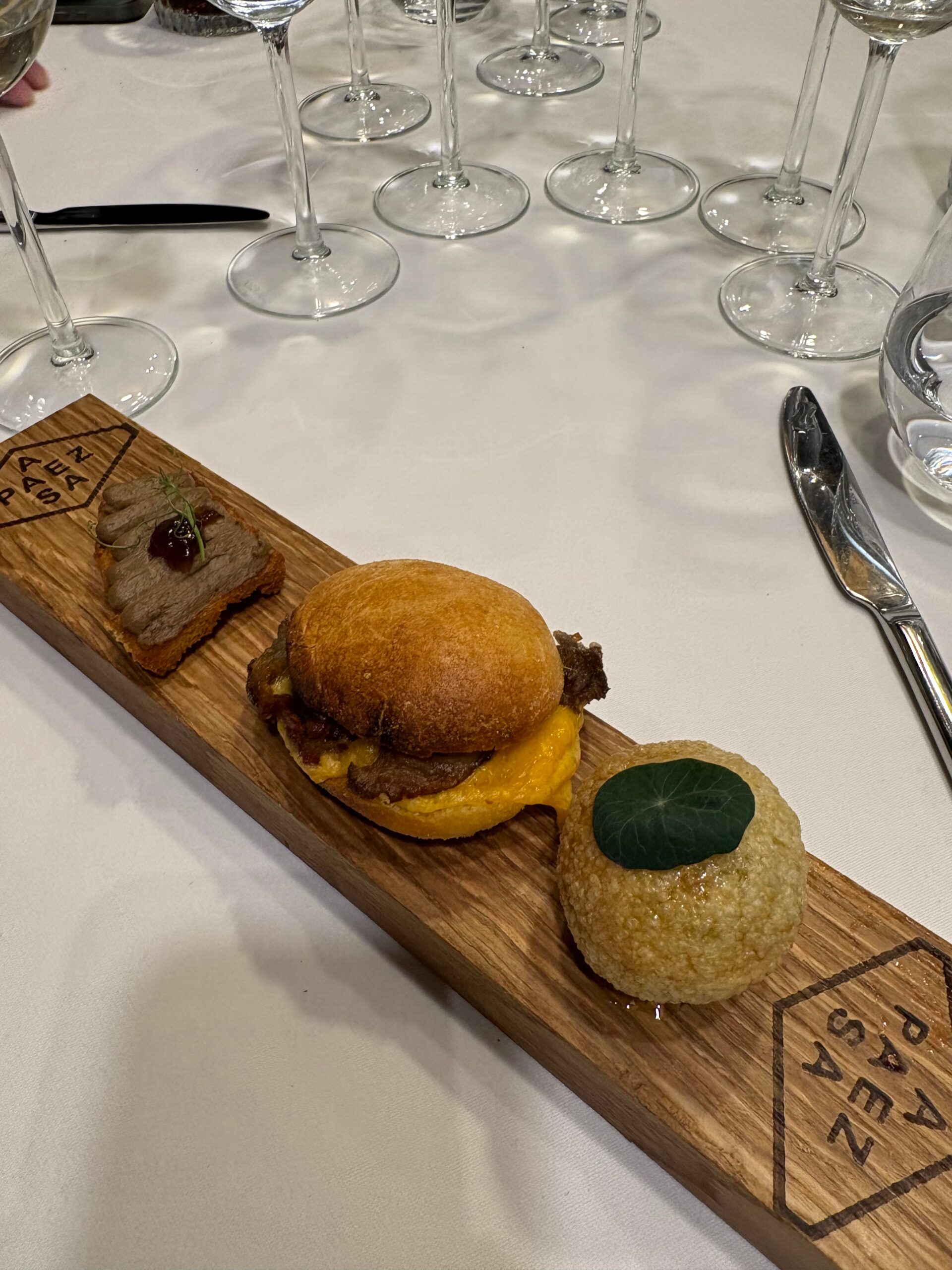

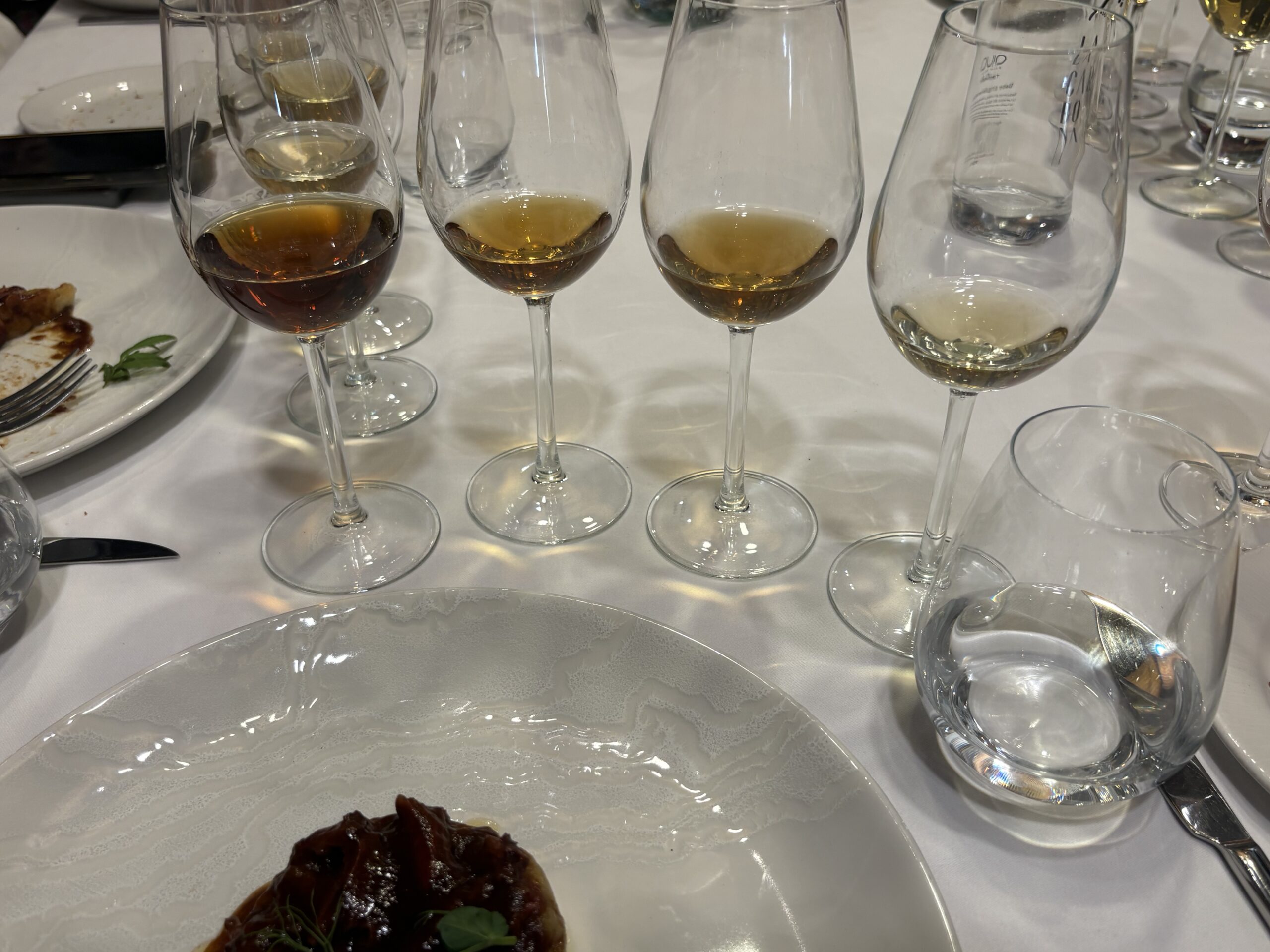

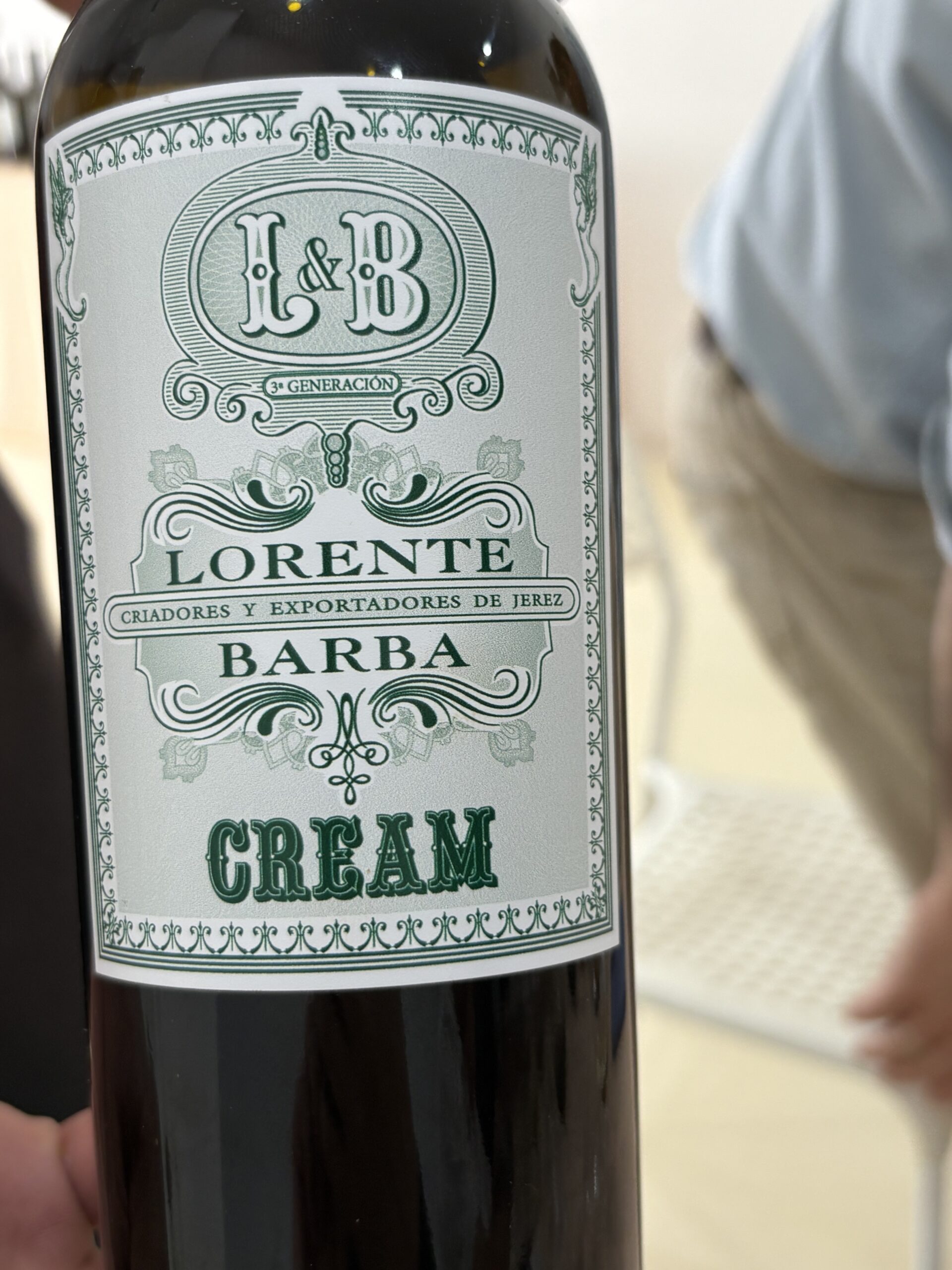


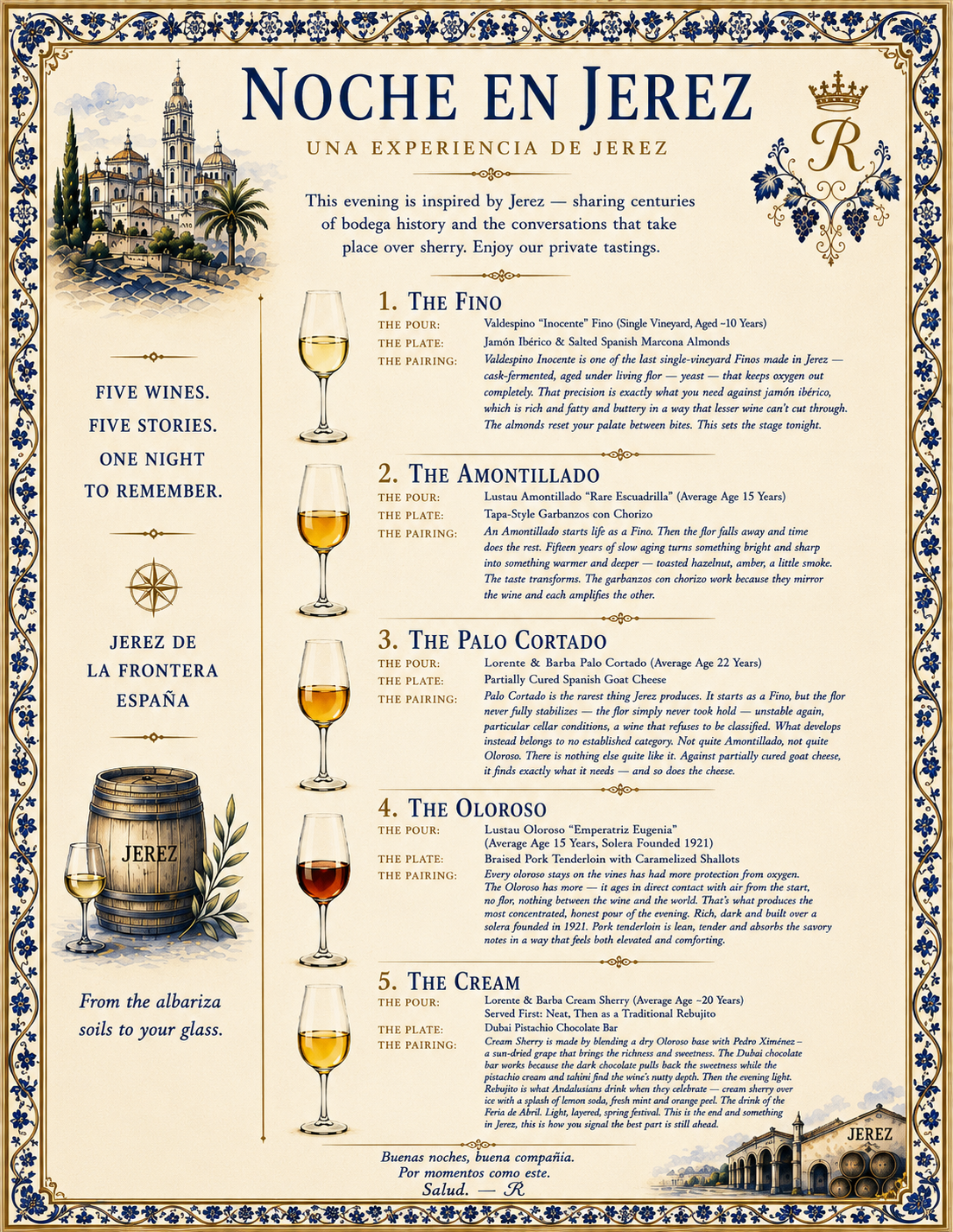
Over winery visits, meals and tastings, I was introduced to the major styles of sherry in the order they are commonly experienced:
- Fino
- Amontillado
- Palo Cortado
- Oloroso
- Cream
- Pedro Ximénez (PX)
Along the way, I learned how aging, oxidation and the solera system transform a single grape into an extraordinary range of wines.
Before discussing the wines themselves, it helps to understand three things that make Jerez unique:
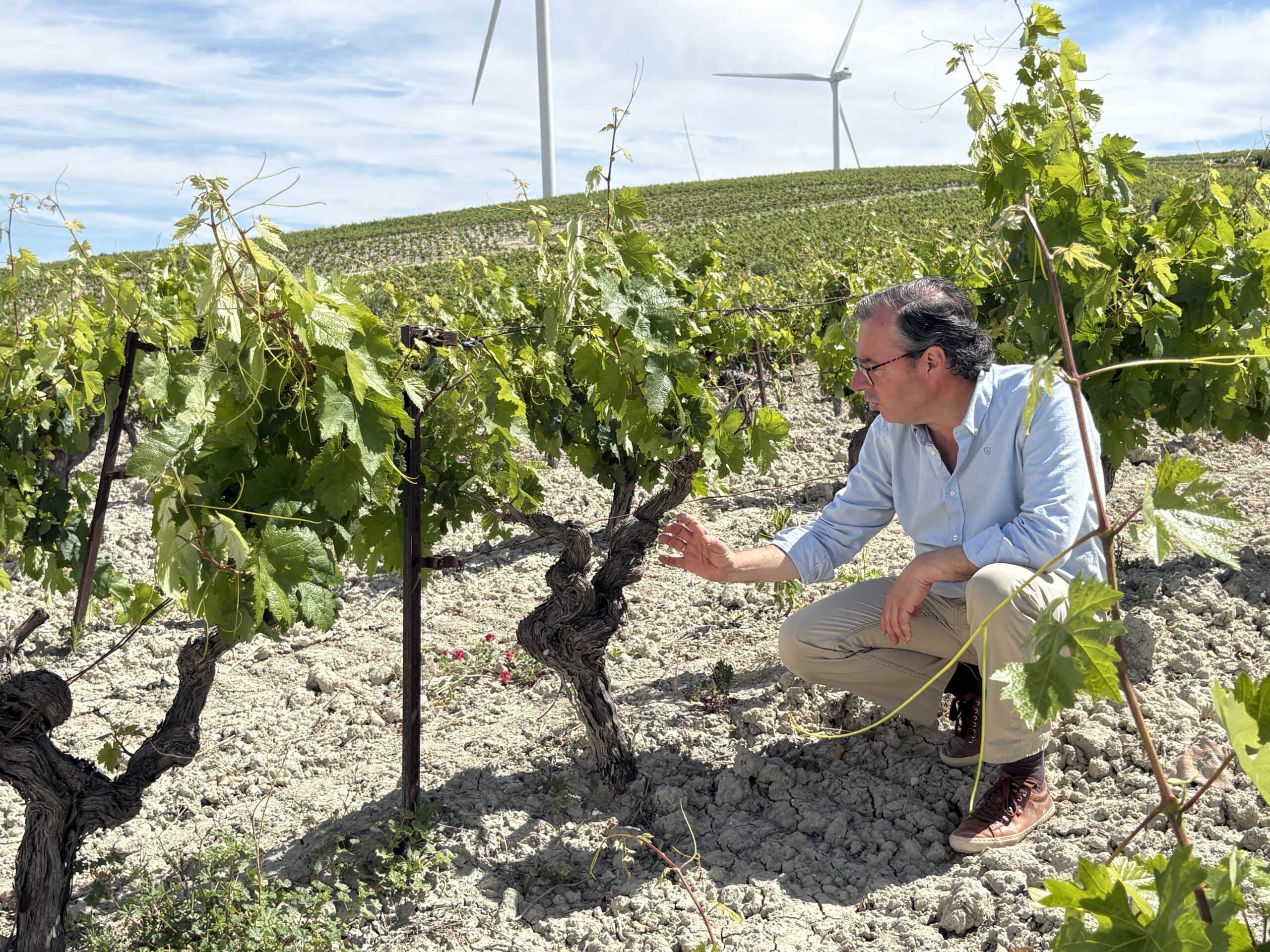
- Palomino grapes are used for most sherry production.
- Albariza soil helps vineyards retain moisture during Andalusia’s dry summers.
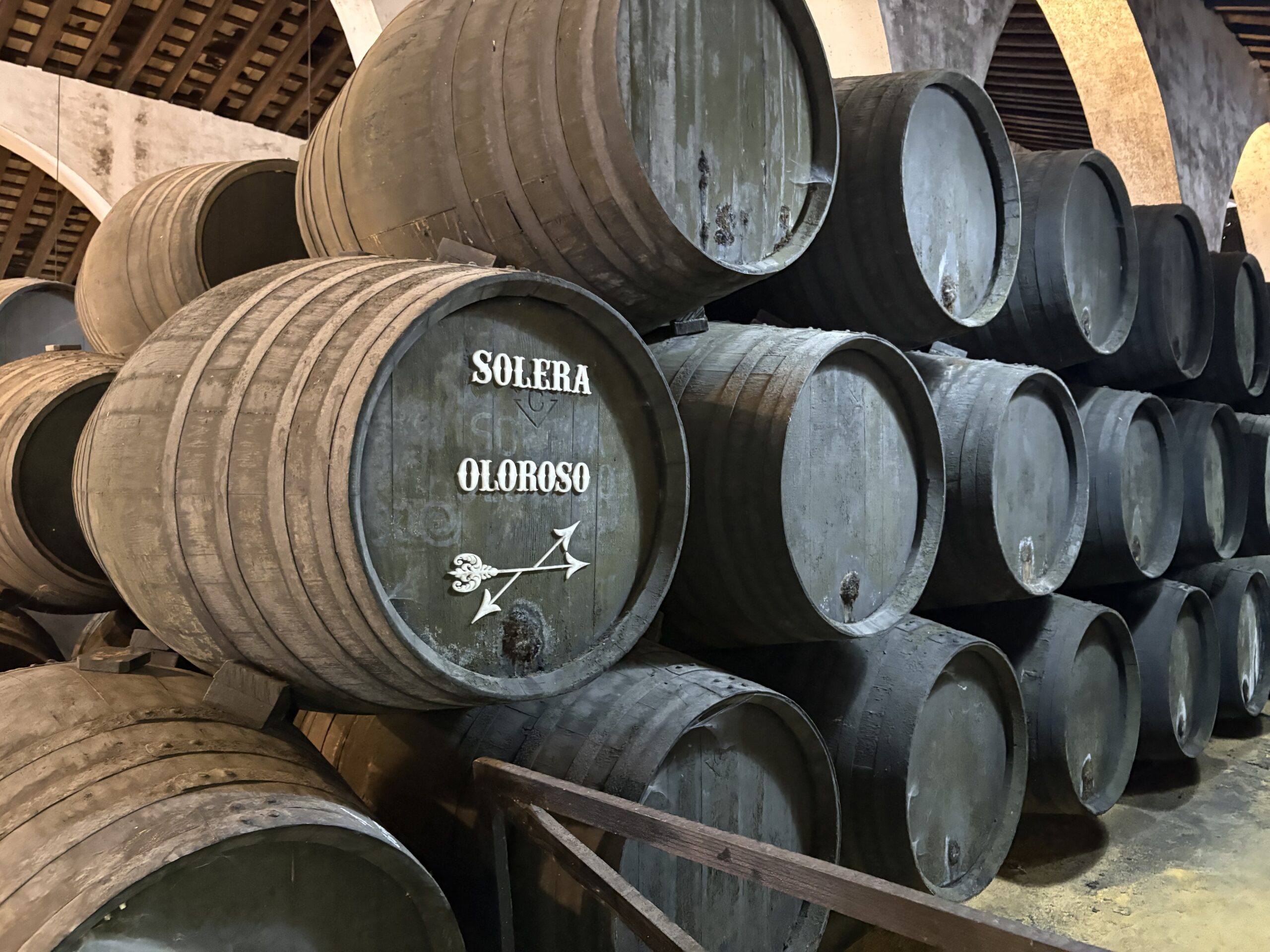
- The solera system allows wines to age and develop over decades.
Fino: This is the foundation of sherry.
Color: Pale gold
Typical aging: 4–10 years under flor
Traditional pairings: Jamón Ibérico, Marcona almonds, olives and seafood
If there is a starting point for understanding sherry wine, it is Fino.
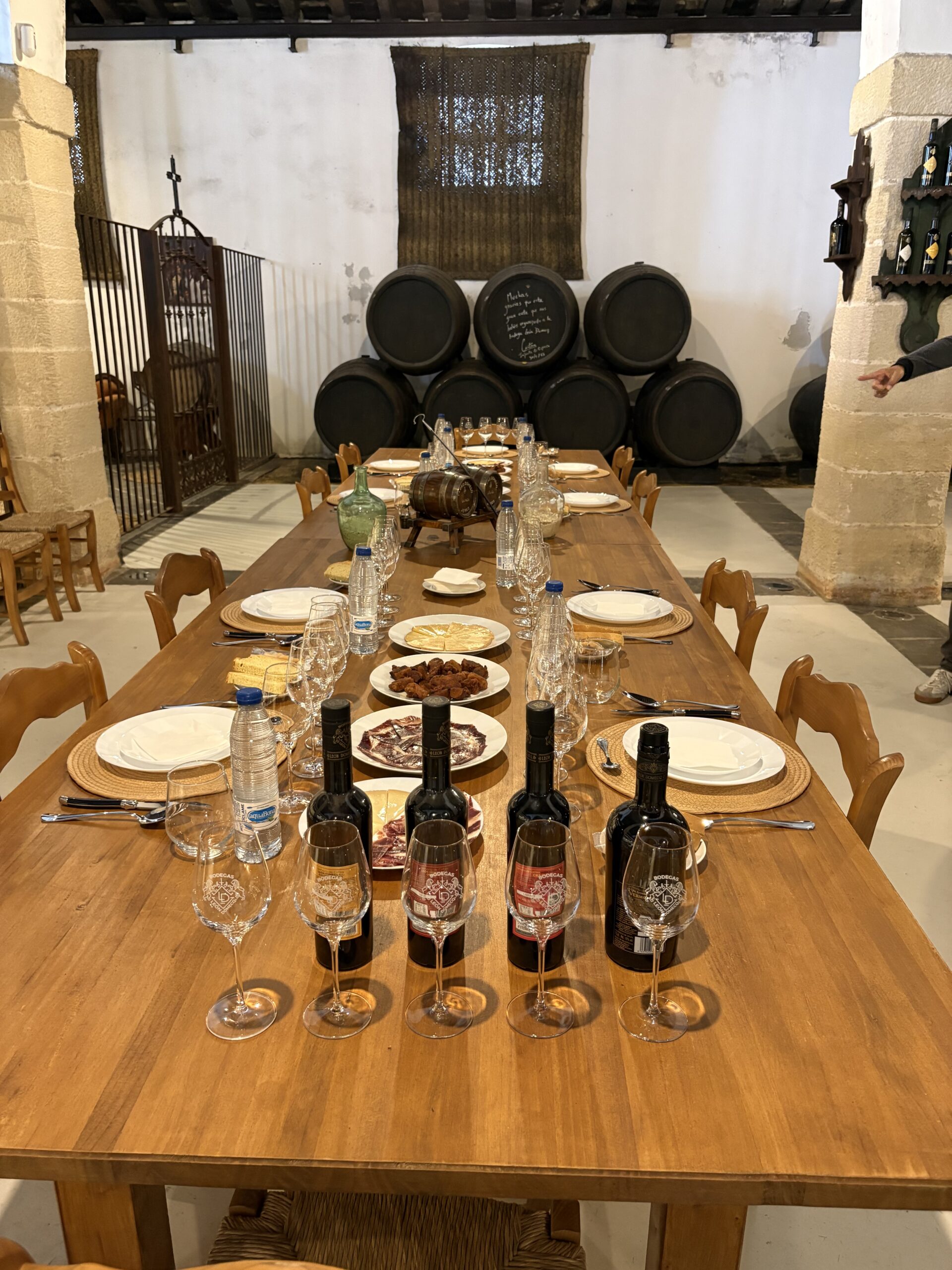
My first serious introduction to Fino took place during a private tasting and lunch at Bodegas León Domecq in the historic center of Jerez.
Guests are welcomed through a charming outdoor courtyard before moving through the winery’s historic barrel rooms. Domecq also has a vinegar bodega, where aging sherry vinegars develop many of the same complexities that make the region’s wines so distinctive. It’s tough to try to put the taste of sherry vinegar into words for its sharp smell, but I liked it.
Before tasting the wines, José Romero introduced one of the most important concepts in sherry production: the solera system.
First, sherries are not identified by a specific vintage year. Instead, they are aged through a system of stacked barrels in which younger wines gradually replenish older wines over time.
In simple terms:
- Wine is drawn from the oldest barrels for bottling.
- Those barrels are replenished with slightly younger wine.
- The process repeats throughout the system.
- Consistency is maintained while very old wines remain part of the blend.
Understanding the solera system explains why sherry is often discussed in terms of style rather than vintage.
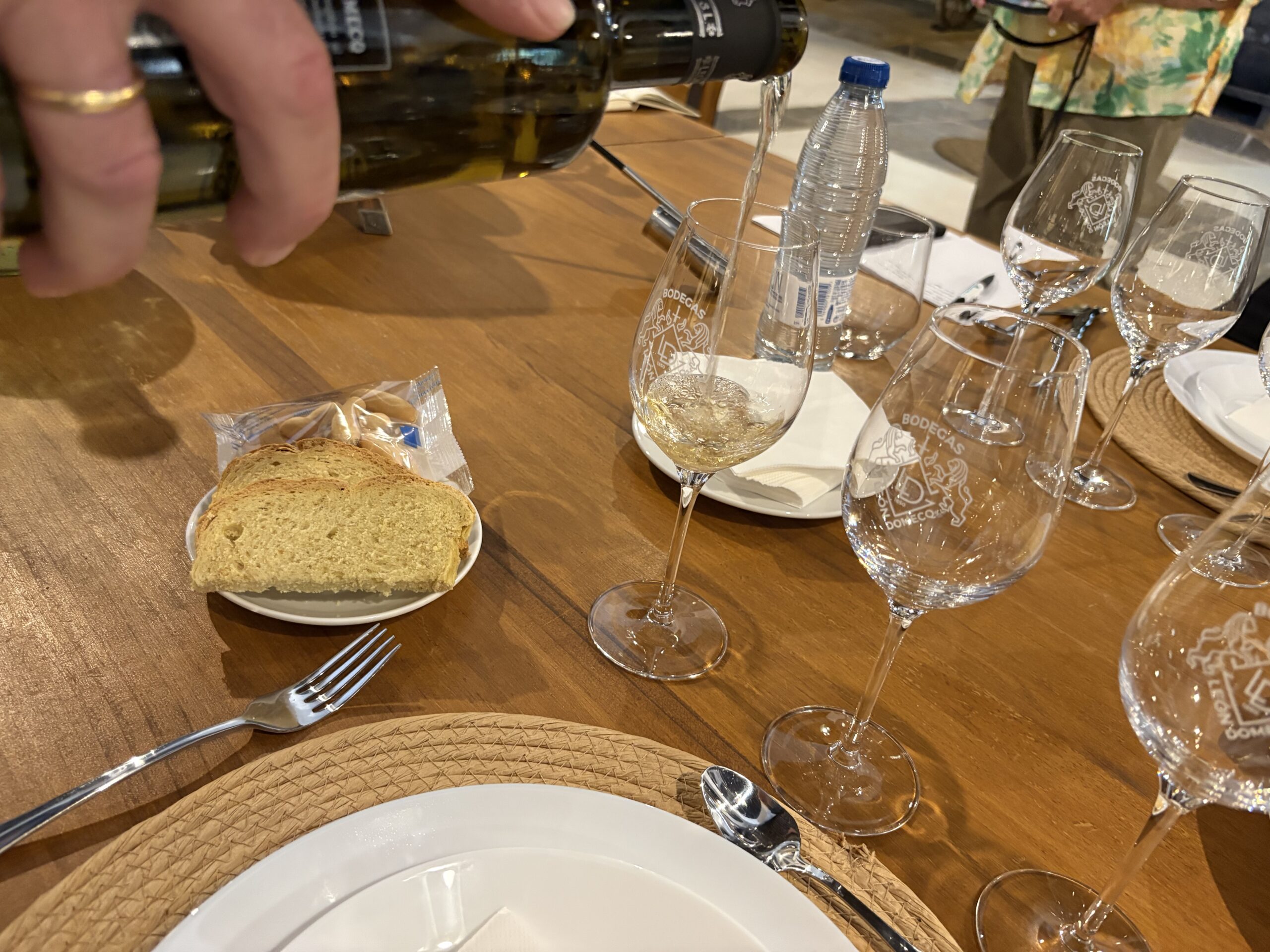
Domecq produces Fino En Rama Señorío de Callao, aged approximately nine years under flor.
Paired with Jamón Ibérico and Marcona almonds, it provided a perfect introduction to the region’s wines. The combination immediately made sense.
Throughout the tasting, thin breadsticks from Los Gorriones Panificadora regularly appeared on the table, helping cleanse the palate between wines.
One of the easiest ways to follow the progression of sherry is by watching the color change in the glass. The pale gold Fino eventually gives way to amber Amontillado, deeper amber Palo Cortado, dark amber Oloroso and finally the dark mahogany tones of Cream Sherry and Pedro Ximénez.
Amontillado: This is where sherry begins to change.
Color: Amber
Typical Aging: 8–20+ years
Traditional Pairings: Mushrooms, poultry, consommés and aged cheeses
Amontillado begins life as a Fino, spending several years aging under flor before continuing its development with exposure to oxygen.
That combination of biological aging followed by oxidative aging creates a wine that remains dry while developing deeper nutty flavors, darker color and greater complexity.
If Fino introduces sherry, Amontillado explains it.
As I moved through the tastings in Jerez, Amontillado felt like the transition point where the wines began shifting from fresh and delicate toward richer and more contemplative styles. It helped me understand that the differences among sherries are often driven less by grapes than by how each wine is aged.
Palo Cortado: This is a surprise discovery.
Color: Deep amber
Typical aging: 15–30+ years
Traditional pairings: Semi-cured cheeses, cured meats and richer tapas
By the time you reach Palo Cortado, the wine has taken on a deeper amber color and considerably more complexity.
Often described as combining the elegance of an Amontillado with the body of an Oloroso, Palo Cortado occupies a unique place in the sherry world. Many examples spend fifteen to thirty years aging in the solera system.
My most memorable Palo Cortado experience took place at Viña Lorente & Barba in the vineyards of Macharnudo Alto.
The experience began with a mule-drawn ride through the property before arriving among the vines, where Mauricio Lorente hosted a tasting overlooking the surrounding countryside. A physician specializing in neurophysiology of the senses, Mauricio also represents the third generation of a family connected to winemaking in Jerez.
That medical background added an unexpected dimension to the tasting.
While experiencing the wines, Mauricio explained how taste and smell work together to create flavor. While the tongue detects basic sensations such as sweetness, bitterness and acidity, much of what we perceive in wine actually comes from aroma receptors in our noses. It was a fascinating reminder that wine tasting is not simply about what is in the glass but also how our brains process the experience.
The wine was the Lorente & Barba Palo Cortado, aged approximately 20 years.
Paired with semi-cured goat cheese, it became one of the most memorable combinations of the trip. The flavors seemed to elevate one another, creating a pairing that was far greater than either component on its own.
I enjoyed it enough that a couple bottles eventually found their way into my luggage for the flight home.
Oloroso: This is rich and patient.
Color: Dark amber to brown (mahogany)
Typical aging: 10–40+ years
Traditional pairings: Pork, stews, roasted meats and game
Oloroso moves into darker amber and brown tones as oxidation shapes the wine from the very beginning of the aging process.
Unlike Fino and Amontillado, Oloroso ages without the protection of flor. The result is a fuller-bodied wine with greater richness, depth and concentration.
One of the standout wines of my visit was the Oloroso Señorío de Callao from Bodegas León Domecq.
Aged for more than 40 years, it demonstrated just how complex sherry can become when given sufficient time. It was a bottle I’m glad I brought home and one of the few souvenirs from Spain that I knew I would enjoy long after the trip ended.
I also purchased a bottle of the winery’s Gran Reserva sherry vinegar, aged more than ten years in barrel. Before visiting Jerez, I had never given much thought to sherry vinegar. After touring the vinegar aging room and tasting it alongside the wines, I left with a much greater appreciation for the product.
Later, at Lorente & Barba, I paired Oloroso with pork cheeks and potatoes served with a sherry-based sauce.
The pork was so tender it barely required a knife. Back home in Chicago, I attempted to recreate the dish, only to discover that finding pork cheeks locally proved much harder than enjoying this in Andalusia.
Had I not already purchased the remarkable León Domecq Oloroso earlier in the trip, I likely would have brought home Lorente & Barba’s Oloroso as well (luggage space and weight limitations).
Cream Sherry: This is full bodied and sweet.
Color: Rich brown (dark mahogany)
Typical aging: Built upon well-aged Oloroso
Traditional pairings: Blue cheese, desserts, nuts and fruit
Cream Sherry introduces a noticeable sweetness into the progression.
Produced by blending Oloroso with sweeter wines, it offers a softer and more approachable style while still retaining much of the complexity developed through years of aging.
Among the Lorente & Barba wines I sampled, the Cream Sherry was one of the most enjoyable surprises of the trip.
Its sweetness never overwhelmed the wine’s character, making it an easy transition toward the final style in the tasting.
Several dessert courses during my visit featured Tocino de Cielo, one of Jerez’s most famous sweets. Made from egg yolks and sugar, it is similar to a custard or flan, although noticeably richer and sweeter. The dessert has an interesting connection to the region’s wine industry. Historically, egg whites were used to clarify wine, leaving extra yolks that were given to local convents. The nuns transformed those yolks into what became one of Jerez’s signature desserts.
I found the Cream Sherry paired particularly well with Tocino de Cielo, allowing both the wine and dessert to complement one another without becoming overly sweet.
Mauricio also demonstrated a refreshing local-inspired cocktail made with Cream Sherry, lemon-lime soda, ice and a twist of orange peel. While traditional Rebujitos are typically prepared with Fino or Manzanilla, this sweeter variation offered a surprisingly refreshing way to enjoy sherry during Andalusia’s warm summer months. This is a terrific summer drink I’m going to make a couple times.
Pedro Ximénez (PX): This is the grand finale.
Color: Nearly black
Typical Aging: 10–30+ years
Traditional Pairings: Chocolate, ice cream, desserts and blue cheeses
Pedro Ximénez, often shortened to PX, represents the final step in the sherry journey.
Produced from sun-dried grapes, PX is so concentrated that it can appear almost black in the glass. Rich flavors of raisins, figs and dates make it feel more like a dessert than a traditional wine.
By the time I reached PX, I understood something that had not been obvious when I arrived in Jerez: Sherry is not one wine.
It is an entire family of wines, each shaped by aging, oxidation, tradition and the unique conditions found within the Sherry Triangle.
Bring the experience home.
One challenge for American visitors is that some of the most memorable wines they encounter in Jerez are not always available at home.
Several of the León Domecq and Lorente & Barba wines I enjoyed remain difficult to find in the United States.
During my final lunch in Jerez at La Carboná, Chef Javier Muñoz paired several dishes with wines from both local producers and larger sherry houses. One wine that stood out was Lustau‘s Emperatriz Eugenia Oloroso.
Inspired by my time in Jerez, I created a sherry tasting for a couple friends, following the same progression from fino to cream and plenty of conversation. ® Rob Hard 2026
While it did not carry the extraordinary age of the León Domecq Oloroso I had tasted earlier in the week, it provided an excellent example of the style and reminded me why Lustau has become one of the most respected and widely available sherry producers.
For readers interested in continuing their sherry journey after returning home, Lustau offers an excellent starting point.
One topic that came up during my conversation with Mauricio was the challenge of finding Lorente & Barba wines in the United States. He indicated that the winery is exploring future U.S. distribution opportunities.
Given the quality of the Palo Cortado, Oloroso and Cream Sherry I tasted, that would be welcome news for American consumers (and potentially my holiday gift giving).
Final Thoughts
I arrived in Jerez having tasted sherry before.
I left with a much greater appreciation for the wines, the people who produce them and the region that made them famous.
More than 3,000 years after the first vines arrived in this part of Spain, Jerez remains one of the world’s great wine destinations.
The true test of whether I had learned anything came after returning home. A few weeks later, I hosted a small sherry tasting for friends, recreating many of the wines and pairings I had experienced in Jerez. The evening reminded me how much there still is to learn—and how much fun it can be to continue exploring these wines long after leaving Spain.
That may be the best lesson Jerez has to offer. You do not simply taste sherry here.
You learn how to appreciate it.
___________
Hero Image: The vineyards Of Viña Lorente & Barba In Macharnudo Alto, where palomino grapes grow in the white Albariza soils that help define the sherry wines of Jerez, Spain. (c) Rob Hard 2026.
Readers interested in a deeper understanding of the traditional Solera and Criaderas aging process can explore the official explanation provided by the Jerez Sherry regulatory council.
For a broader overview of Spanish wine, sherry and regional drinks, see our guide: Drink Your Way Through Spain.
Check out our review travel to Jerez, Spain and check out out Jerez resources from the Spain Tourist Office and Jerez Tourism.