
Business travelers and meeting professionals have increasingly prioritized sustainability and green practices when selecting hotels and convention centers. Traditional initiatives like linen and towel reuse, in-room recycling and energy-efficient lighting remain essentialm. Many hotels today are going beyond the basics to meet the growing demand for environmentally responsible events.
This is in line with the goals of event planners. According to Meeting Professionals International (MPI), meeting planners are integrating corporate social responsibility into their strategies, reflecting a commitment to sustainable practices in meetings and travel.
Green hotels and convention centers
 Choosing a property that integrates sustainability at the design, operational and event levels can significantly reduce the environmental impact of a meeting. For example, ARIA Resort & Casino at CityCenter Las Vegas incorporates advanced energy systems, water conservation, and sustainable sourcing to lower the footprint of meetings and events.
Key initiatives to look for in green hotels include:
-
Energy efficiency: low-wattage lighting, smart thermostats, window glazing and rooftop reflectivity.
-
Water conservation: low-flow plumbing, drought-tolerant landscaping and irrigation sensors.
-
Indoor air quality: non-toxic paints, adhesives, and cleaning products; smoke-free rooms; proper ventilation.
-
Recycled and local materials: use of construction materials with high recycled content and local sourcing.
-
Waste reduction: recycling programs, composting and pre-set water on request.
-
Sustainable transportation: proximity to airports, pedestrian-friendly campuses, bike storage and EV/hybrid employee parking.
Many hotels now aim for LEED certification (USGBC) or Green Key Global Eco-Hospitality Certification, signaling compliance with internationally recognized sustainability standards. For example, ARIA and Vdara have multiple LEED Gold certifications and 5/5 Green Keys.
Checklist for green meetings

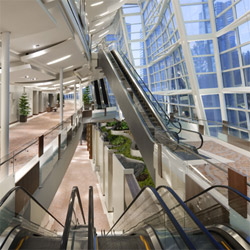
McCormick Place Chicago. Courtesy image
Meeting planners can use this checklist to ensure their events are environmentally responsible:
-
Venue selection
-
Ask for sustainability certifications (LEED, Green Key).
-
Evaluate energy, water, and waste reduction programs.
-
Confirm green event policies for catering, materials, and AV services.
-
-
Energy and water management
-
Inquire about LED lighting, smart HVAC systems, and low-flow plumbing.
-
Review energy-saving strategies for meeting rooms and public areas.
-
-
Sustainable food and beverage
-

The rooftop garden at Hilton Chicago where herbs and produce are grown and promotes sustainability. Courtesy image
Request locally sourced, organic, and seasonal menu items.
-
Reduce single-use plastics and encourage composting/recycling.
-
-
Waste management
-
Confirm recycling and composting practices.
-
Encourage digital materials and minimize paper handouts.
-
-
Transportation and mobility
-
Promote public transit, ride-share, or walking options for attendees.
-
Check for EV charging stations or shuttle services.
-
-
Communications and education
-
Highlight sustainability efforts in event materials and attendee communications.
-
Provide signage explaining recycling, energy savings, and other green practices.
-

For more guidance on sustainable meetings, visit Green Meetings Checklist on Business Travel Destinations for related planning tools.
Additional resources
-
Meeting Professionals International (MPI) – insights on sustainable meetings and corporate social responsibility.
-
US Green Building Council (USGBC) – LEED certification standards for hotels and convention centers.
-
Green Key Meetings Program – hotel sustainability assessment tool and database.
- Checklist for Planning Seminars and Meetings
Updated. Initially published August 22, 2011.